The University of Glasgow is the second oldest of Scotland’s four Ancient Universities and the fourth oldest in the English-speaking world. It was founded in 1451 by a Papal Bull from Pope Nicholas V, on the suggestion of King James II of Scotland. The Bull championed the Bishop of Glasgow, William Turnbull, to found a University within the Cathedral. Like Saint Andrews before and Aberdeen afterwards, the University of Glasgow was an ecclesiastical institution and very much tied to the Church.
It’s worth noting that Glasgow was an increasingly important centre for the Church in medieval Scotland, and the institution of a university within its cathedral was likely a sign of this growing importance – indeed 41 years later, Glasgow’s status was elevated to an archdiocese.
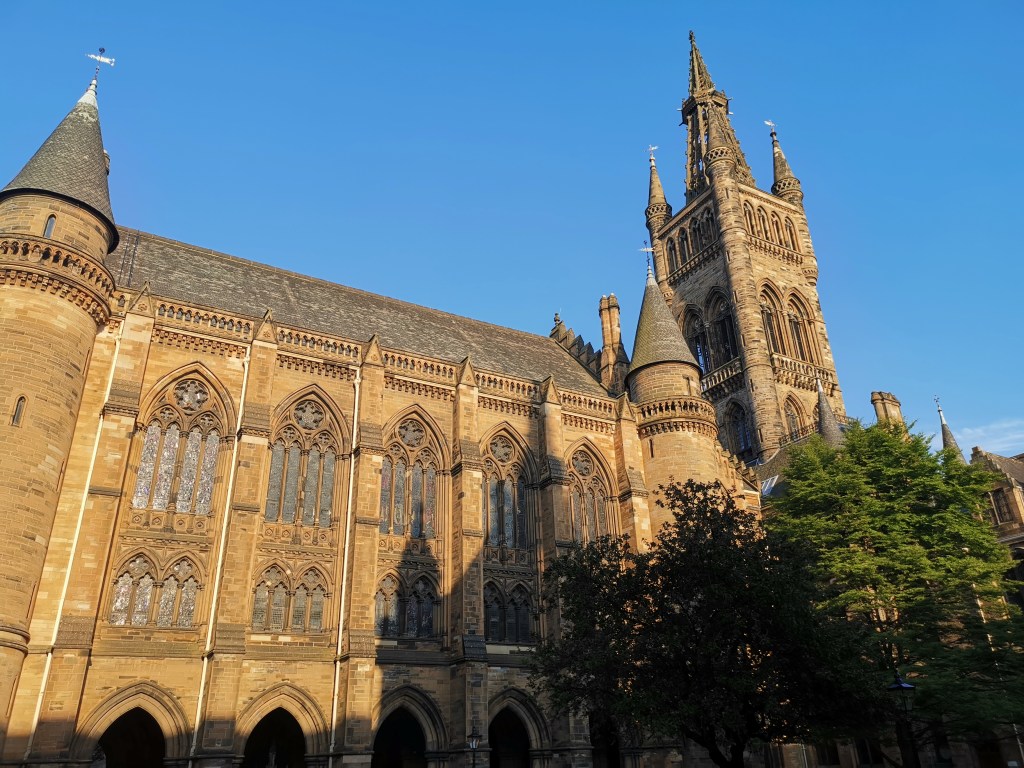
One could be forgiven for looking at the existing buildings at Gilmorehill, currently making up the University’s main building, and think; “’twas always thus”. Their grand Gothic (Revival) style evokes certain ideas of certainty and timelessness. The vaulted cloisters, the grand halls, the towering spire, and those Hogwarts-esque turrets, make it seem as though it were always there. The reality, however, is quite different. To find out more, we must go further east – out to Glasgow Cathedral. And back nearly six centuries
Teaching began in the chapterhouse of Glasgow Cathedral in the 1450s and in buildings around the Cathedral itself. Initially, teaching was aimed at preparing the young students for a life in service to the Church.
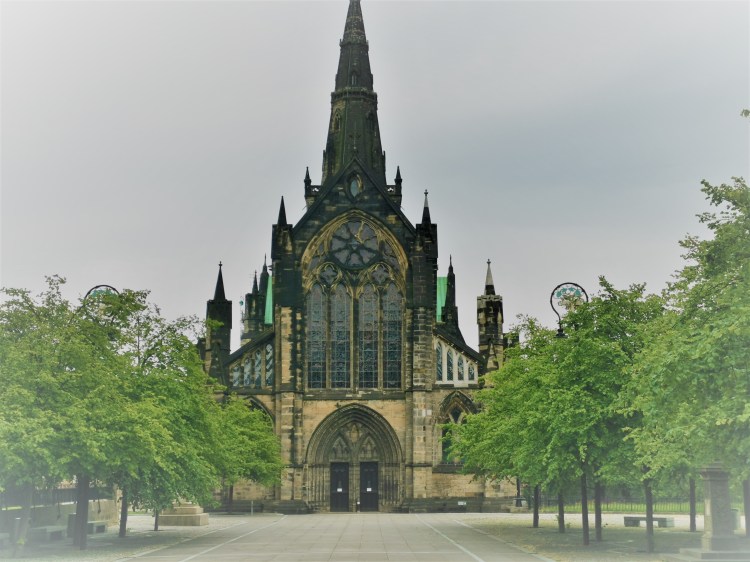
The University eventually moved out of the Cathedral and was granted land on High Street by Lord Hamilton in 1460. As the times moved on, the University grew, offering more courses outside of those simply designed to prepare young men for a life in service of the Almighty.
The University would remain on High Street for another four centuries. The site expanded in 1560 with a grant of yet more land from Mary Queen of Scots behind the existing buildings. Eventually, the old buildings would prove to be too small for the growing University and, through, through the 17th century, new buildings would encroach forward, eventually replacing the previous construction with the “Nova Erectio”.

This new, grander, two-court building had a decorated front, running along High Street. There was a tall clock-tower, which became a fixture of the Glasgow sky-line. The two courts would be mirrored in the design of the Gilmorehill campus. And, around the University, sprung up gardens, the MacFarlane observatory, and the Hunterian Museum – the oldest public museum in Scotland.
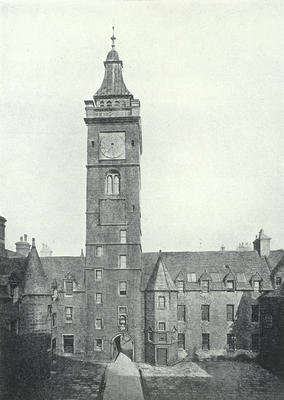
https://www.glasgowlive.co.uk/news/history/glasgow-university-568-years-old-15640534
From around 1660, this site flourished, and was a major centre for the Scottish Enlightenment. Such great minds as Adam Smith, Colin Maclaurin, Joseph Black, and John Anderson (who would go on to found what we now know as the University of Strathclyde) would all pass through its gates.
However, Glasgow was changing around its university. By the 19th century, the city had become a hub of commerce and trade (see place names such as Commerce Street and Tradeston to see just how important we must have thought them!). The Union of Scotland into Great Britain and the ever expanding British Empire further pushed this growth. As such, the city was becoming bigger and more crowded. With it, the University began to expand, but the campus on High Street was being constricted by this growth.
The 19th century also saw the Industrial Revolution hit its stride. Glasgow became a key player in this, with heavy industry springing up all across the city; ship-building, textiles, locomotive construction, iron and steel foundries. You name it: Glasgow was making it, shipping it, or selling it.
With this rapid industrialisation, the population soared. Workers, traders, craftsmen, and people of all kinds flocked to Glasgow from across Scotland, Ireland, and the wider world. In 1831, the population density of the city was roughly 23,000 people per square kilometre – compare that with the figure of around 3,500 people per square km in 2011.
As the century wore on, the High Street end of town was no longer as attractive as it once was. Hemmed in by industry and ever-more prevalent slum housing, the University sought to move out to the more fashionable west-end. There remained the matter of financing the move, however. This would bring in another key player of the Industrial Revolution – the railways
As early as the 1840s, the University was in negotiations with railway companies for the sale of the site and the relocation of the University. In 1846, an Act of Parliament made it possible for the University to move to a new home on Woodlands Hill.
The task of designing the University’s new accommodation fell to Glasgow architect, John Baird who, through the 1840s, submitted various designs to the University’s Faculty for approval. These were largely in a Jacobethan and Scottish Renaissance style, and would build on the two-court layout of the Old College.
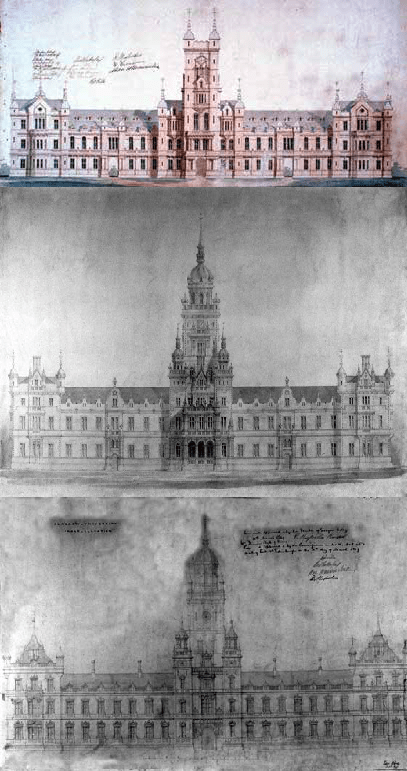
Top: https://www.gla.ac.uk/media/Media_222887_smxx.pdf
Middle and bottom: http://soas.is.ed.ac.uk/index.php/psas/article/download/9649/9616
Ultimately, these designs fell through due to disagreements from the Treasury and the eventual purchase of the site on Woodland Hill by the developers of the Park Circus housing. Various other factors resulted in further delays, and John Baird died in 1859. The move wouldn’t take place then for some years yet.
In the 1860s, following renewed interest from another two railway companies, the University began discussions about a new site once more. The plans by Baird and Blore from the 1840s no longer suited the accommodation requirements of the University, and so a new architect was needed. The task would eventually fall to George Gilbert Scott, who would design the building we know today. This caused a considerable upset among Scottish architects, many of whom viewed the Gothic Revival style as inferior.
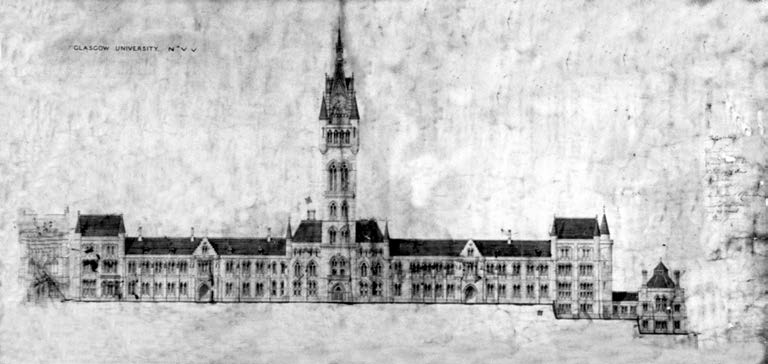
Various tweaks to the design – for example the omission of a clock on the spire – and the addition of the Chapel have all come together to give the buildings we know today. These additions, partly by Scott’s son, Oldrid, would be built throughout the 19th and 20th centuries.
The University moved to its new home in 1870, leaving the old site behind, now in the possession of the City of Glasgow Union Railway – to whom the site had been sold in 1863. So, what became of the Old College?
Well…
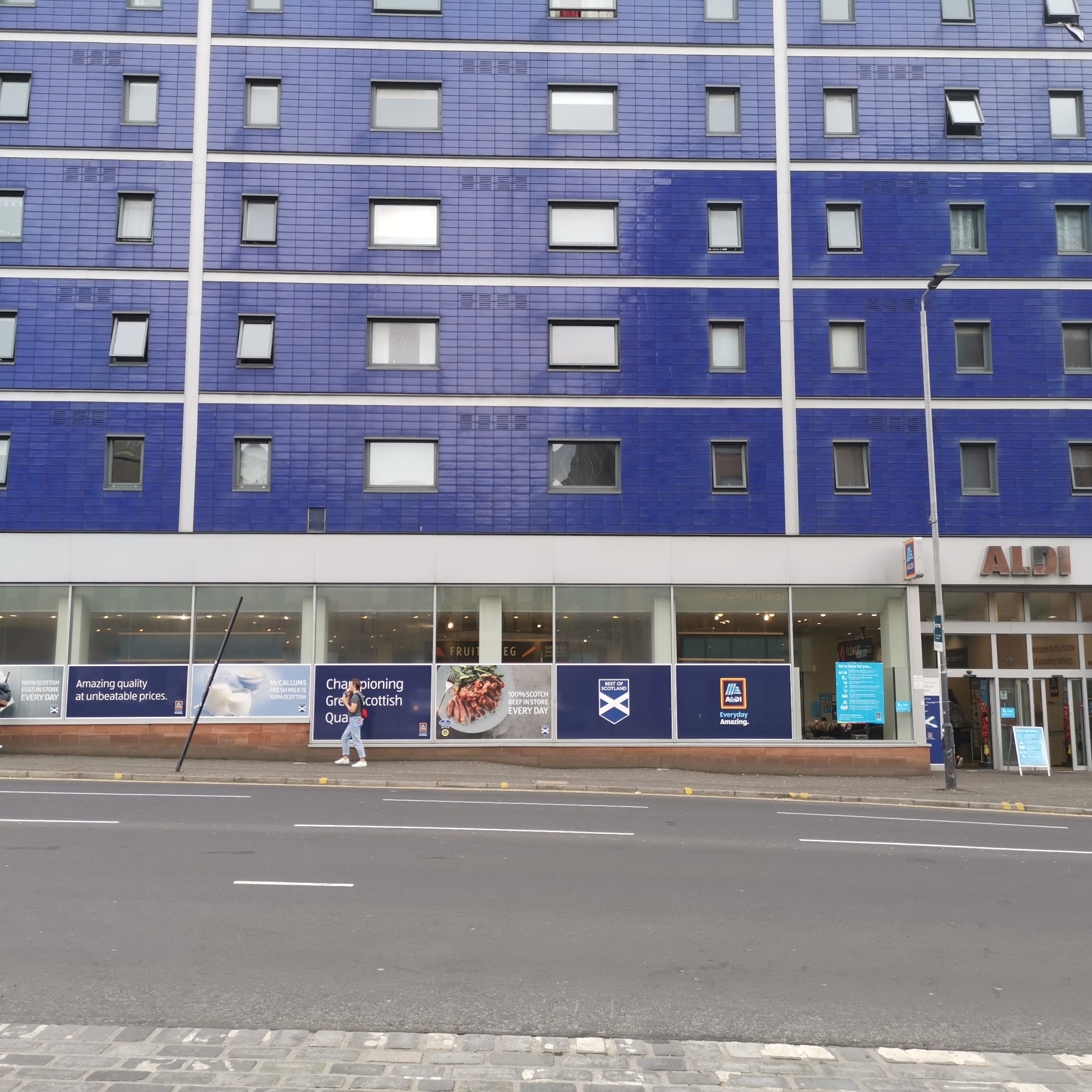
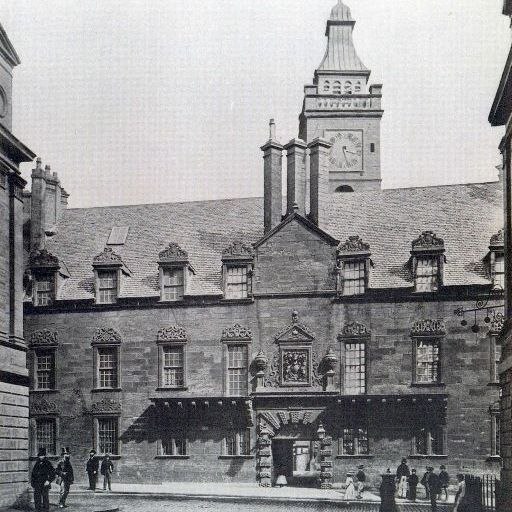
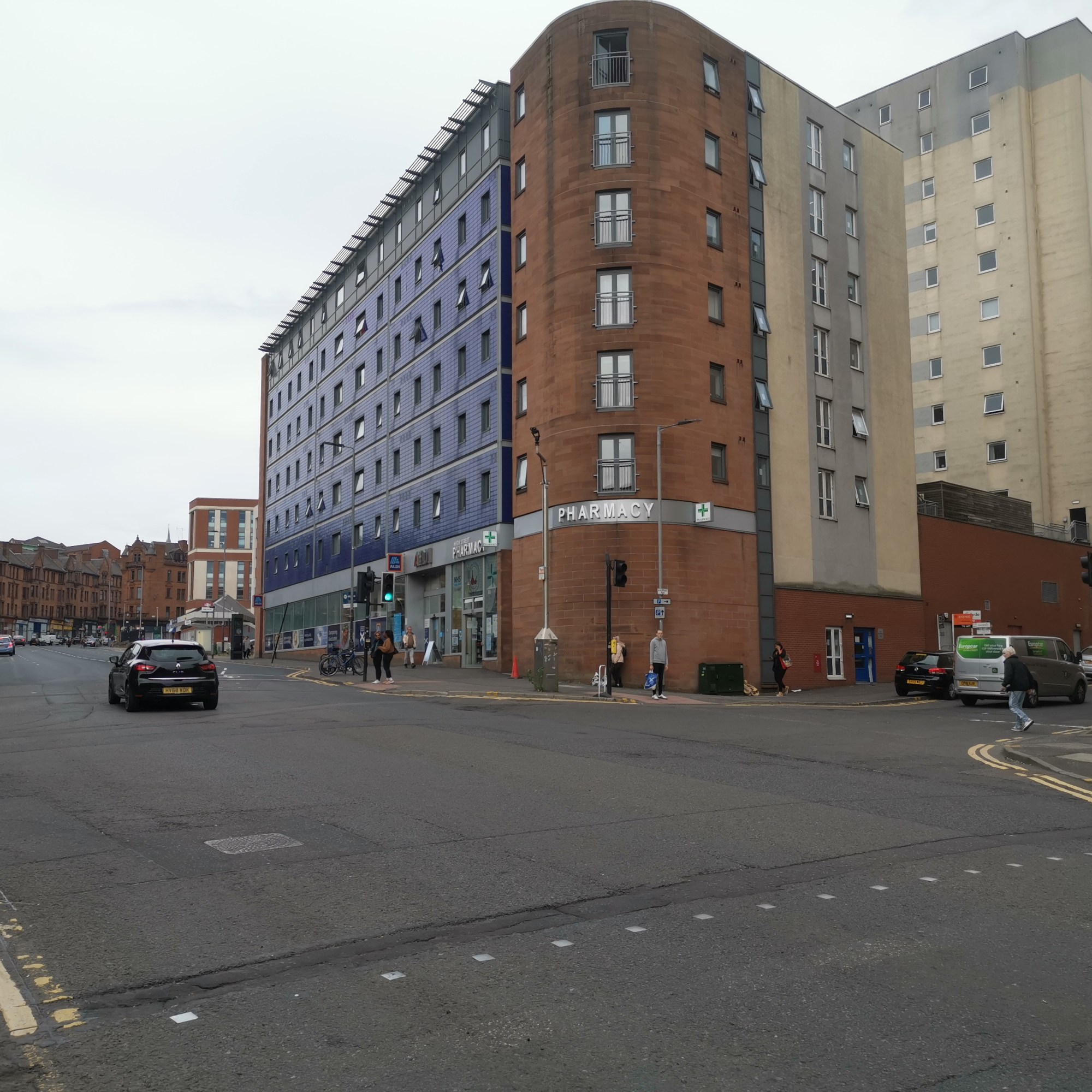
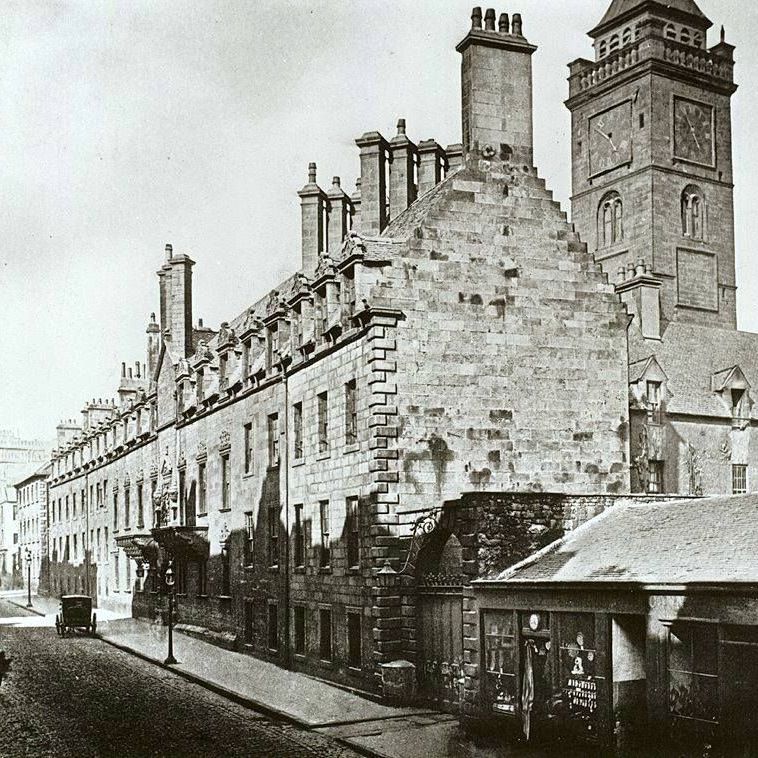
As hard as it may be to imagine, these images are all taken from the same positions – College Street, looking westwards onto High Street, and High Street, looking northwards. The more eagle-eyed amongst you will spot that the Old College doesn’t appear in the newer pictures.
Following the University’s move to Gilmorehill in 1870, the site was occupied by the City of Glasgow Union Railway and the old buildings were subsequently demolished. Those grand old buildings, stood upon that site and part of Glasgow’s skyline for over 200 years, were bulldozed to make way for a goods yard.
It’s possible that the old buildings stayed in some form as an entrance to “College Station”, but I can’t find any real evidence of this. Furthermore, the station was not a passenger station, and the goods sheds required the space being taken up by the old buildings.
The Old College buildings were, without a doubt, some of the finest examples of Scottish civil architecture from the period, they were a landmark of the city and the clock-tower was a fixture in the city’s skyline. Their demolition was, almost certainly, one of the biggest acts of vandalism ever carried out in this country.
But, that was the Victorian ideal of “progress”. And, get used to it, “progress” is a word that will be cropping up a lot on this blog! Indeed, it’s the very same progress that killed off the railways and left the site empty. It has, since, been developed into flats and a very scenic supermarket, but the scars of industrialisation and eventual industrial decline can still be seen in Glasgow’s High Street – and across much of the world too.
However, it’s not all lost to time. The area is still known as Collegelands and there are other reminders in College Street and, importantly for students, the Old College Bar. The University of Strathclyde is located just up the road too. But what of the old buildings?
Well, a little of them remains to this day, out in the west end.
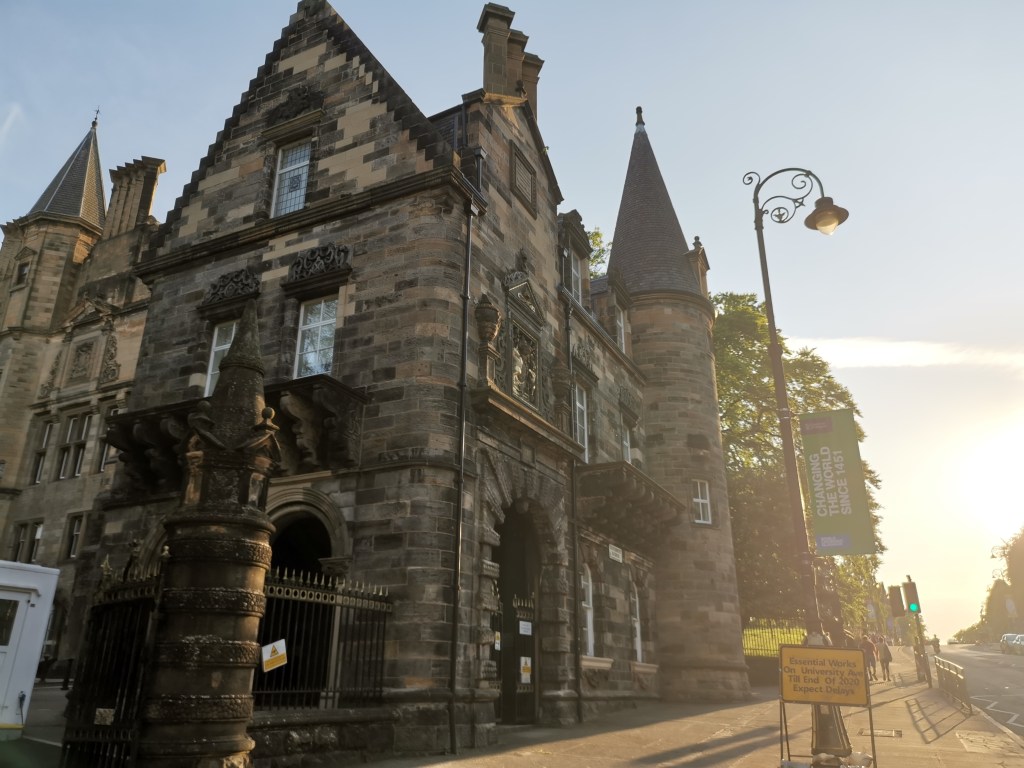
At the bottom of University Avenue sits Pearce Lodge. It was build from parts of the original gatehouse and other sections of the Old College. It originally housed the Naval Architecture department when the University moved over. Many of the features have been well preserved and the old building gives a sense of just how much bigger the new campus is.
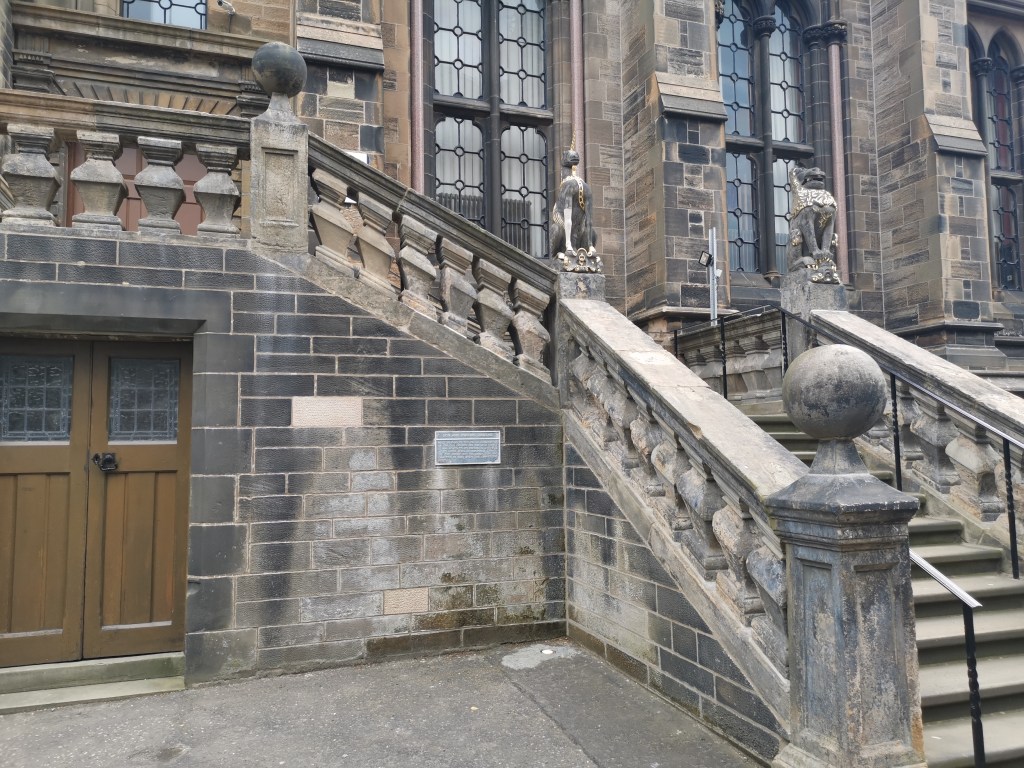
On the other side of the Gilbert Scott building lies one other feature. The Lion and the Unicorn stair, originally sitting in one of the courts, now leads up to the University’s chaplaincy. These features allow for some solid evidence of the University’s past life.
It is almost impossible to imagine anybody allowing the demolition of the University’s current home in the name of progress. But such was the mentality of the time.
And that’s it. The University of Glasgow remains at home on Gilmorehill. In November of this year, the University will celebrate 150 years at its present site. There will, hopefully, be many, many more such anniversaries to come!
I hope you’ve enjoyed this first substantive post. The University is an institution that means a lot to me personally, and it was very much what got me intrigued in this whole field all those years back.
For some extra reading, I would suggest:
“University of Glasgow: Estates Conservation Strategy” (2012), Simpson and Brown Architects (https://www.gla.ac.uk/media/Media_222887_smxx.pdf)
Grant D. (2005) “Removal of the University of Glasgow to Woodlands Hill 1845-9 and Gilmorehill 1853-83”, Proceedings of the Society of Antiquaries of Scotland 135 (2005), 213-258 (http://soas.is.ed.ac.uk/index.php/psas/article/download/9649/961)
 Glasgow Then and Now